Related Posts Plugin for WordPress, Blogger...
Showing posts with label Kettles Yard. Show all posts

Saturday, 12 March 2011

Mischief

Two months ago I worked at the private view of Lucia Noguiera's exhibition at Kettle's Yard. While serving drinks to Noguiera's beautiful daughter, various essayists, curators and organisers of the exhibition and Cambridge's most cultured crowd I had a few minutes to tour the exhibition. As I left, clutching a copy of the exhibition catalogue, I promised myself that I would return to think about the exhibition properly away from the excitement of the evening. Today I finally followed the promise back to the gallery space of Kettle's Yard.


'My way of thinking is very much from Brazil: my way of picking up objects comes from there too. It is something connected with childhood and also with the Brazilian psyche. Our way of thinking is not as linear as it is in Europe ... In art you obviously have a background in art history that is very rich. We don't have that in Brazil at all ... We just do everything in a very empirical way, even art.'

The gallery has been filled with Mischief now for a long time but the trails of red cord have not lost their sense of play. Noguiera's work asks, what can we do with material? And more pertinently for the current curatorial climate, what can we do with sculpture? As I follow trains of carrier bags, fibres, salvaged furniture and wasted materials the answer continually evades me, disappearing in to a hole in the floorboards or fading in to white wall space. However this is Noguiera's strength. She can lead us on this sculptural dance, this trail of discovery, which leaves cupboard doors ajar and unsettled, but never need offer us that final release. She is the cruel parent who leaves her children hiding in the game of Hide & Seek. Left in the dark alone we begin to doubt our purpose, we forget the point of the game and eventually come out in to the light with only our questions reaffirmed. As Adrian Searle wrote with such precision 'Her work reveals, it does not explain.'

If there was one sculpture which came closest to lucidity, to elucidating, then it was this Untitled sculpture (1989) made from metal, glass lenses and gauze. Through the lens on the left we see nothing more than what is there. In the right lens a deep tunnel has been created, a small glimpse in to the creation of an otherworld. As people view the exhibition they creep up close to the gauze and wire and peer in to this limitless abyss held in the small, round eye of the lens. The two possibilities are juxtaposed; sculpture that means and sculpture that does not. But if we are led towards a clear judgement here how do we apply it to the rest of our experience? The answer is that we can not, there is no one formula for interpretation and comment.

The watercolours were poised in an expert tension with the brutal, barrenness of the sculpture. Bright, fluid shapes performing a dance of a different kind on the walls. Still a search for incidental and intentional forms persists, introducing a new means of mischief and continually stretching the capacity of its audience.

Wednesday, 26 January 2011

Cardozo Kindersley Workshop

Quotation from John Donne- letter-cutting is literary as well as visual

There is nothing like discovering discovering that something exciting and useful has been right under your nose all this time, unnoticed. I was making a passing comment to somebody about how perfect a location Cambridge was for my dissertation; there is Kettle's Yard, David Jones's letters to Jim Ede, a Divinity Fellow with a secret stash of relics from Ditchling and then the resources of the UL. She agreed, but didn't mention any of these things, just the Kindersley workshop.

In 1934 David Kindersley was apprenticed as a stone-cutter to Eric Gill at Pigotts. Eventually, frustrated by the religious strictures of Gill's working practices, he left to start his own workshop. Now located in Cambridge (a five minute walk from me, who knew?) the workshop is passed between generations as it takes on dedicated new apprentices who have fallen in love with letters. The Kindersley workshop produces headstones, memorial plaques, street signs and a whole range of commissioned work which at times moves towards being (although 'Art' is a dangerous word for Lida) lyrical, inscribed sculptures of immense poetry.

A quotation from Salvador Dali, which comes with a story Lida is keeping alive. 'Making is breaking' she says, this is what their work is all about. In order to make an inscription they break the surface of a stone that has existed for thousands of years. The minutest of errors destroys the work.

I have just returned from my visit to the workshop, gifted with books and postcards and thoughts and ideas, which my head is brimming and swimming with. I have a love and respect for Lida Cardozo Kindersley (David's widow) who currently the runs the workshop with passion and precision but also with the spirituality of alphabets; of lines, forms and characters which have a relationship amongst themselves, with stone and with the environment they are eventually placed within. She takes me to see a headstone which will be laid out on the ground, with a sweeping gesture and the reflection of sunlight in her eyes she explains how the light of the day will change letter and stone surface, bring everything to life.

The surface of the rock already has the sea, the beach, the sky and its birds written on it.

The whole workshop is a visual palimpsest (photos will have to follow) of tablets, sculptures, rubbings, words which are pure poetry or those that become doctrines for work, postcards, drawings and a whole collage of materials collected to form a part of the workshop's atmosphere, its creatively focussed energy. I sit at a great wooden table in the centre of the workshop as coffe break begins, biscuits are passed around, everyone is reading newspapers or books, there is light chatter. Then the break is over and the whole workshop is filled with the chippings of chisel on stone, the hum of deep concentration. Lettering is a language, Lida asserts, each letter has its own character, and she goes on to talk about the joy of the letter 'Y'.


Thursday, 30 December 2010

Reasons to Smile in 2011

It seems that the end of the year is not just for one particular countdown (of which there is a very funny description at Spare Time Gone Awry), but of countdown lists, the top ten best T.V moments of 2010, the top ten news stories, blah, blah, blah. I have to admit to being a bit of a closet fan of these lists; neat and ordered. I used to make one every year, a summary of what I had done, films I had seen, countries I had visited etc. This year I don't feel like making one of these lists. I have had a very rich and full list of experiences, happinesses and achievements. However the year has not come to the best of ends and I'm not sure that recalling all of that happiness is a very useful activity. So here is a list of ten art things that I will be looking forward to in 2011. Feel free to mention the things I have missed.

1. Modern British Sculpture- Royal Academy of Arts (22nd January-7th April) This year at the Royal Academy I experienced a revelation; I had always dismissed sculpture because I didn't understand it and it didn't communicate with me. Then on the recommendation of my supervisor I went to Wild Thing and all of a sudden there was the sculpture of Eric Gill, Epstein and Gaudier-Brzeska speaking to me of the sensuality of stone, of its fleshly corporeality. I don't doubt that the Royal Academy will bring another challenging and astounding exhibition and offer another revelation.
'The exhibition will take a fresh approach, replacing the traditional survey with a provocative set of juxtapositions that will challenge the viewer to make new connections and break the mould of old conceptions.'


2. Shadow Catchers Symposium (4th Feb, V&A)- Yes I loved the exhibition so much I booked myself a space on the symposium like the giant art geek that I am. The artists will be speaking and so will Marina Warner (a slight and distant hero of mine). This feels like the future of photography.

3. Venice Biennale- This is a huge event and perhaps I will be there. Art, Cinema, Architecture, Dance, Music and Theatre, where else would you want to be over the summer?

4. Eric Gill: Public and Private Art, British Museum (10th February- August 7th)- I love Eric Gill and believe he deserves appreciation. My dissertation won't be finished yet either, so I can count this trip as research!

5. Barcelona- Since I am going in a couple of weeks...it looks like I will only catch the dregs of exhibitions from 2010 but this is an art city and will be a landmark of the year.

6. The Guggenheim New York- Because perhaps, just maybe, I might be here too.

7. Lucia Nogueira, Kettle's Yard (15th January-13th March)- It would be a crime to forget the treasures of exhibitions which will be occurring on my doorstep. More sculpture, Nogueira is involved with what seems to be a kind of reclamation, her work has been described as a process of 'taking things which are close to hand and imbuing them with malignancy and magic.' A lot of exciting things are happening for sculpture next year and Cambridge will be an important part of the exploration too.
'My way of thinking is very much from Brazil: my way of picking up objects comes from there too. It is something connected with childhood and also with the Brazilian psyche. Our way of thinking is not as linear as it is in Europe ... In art you obviously have a background in art history that is very rich. We don't have that in Brazil at all ... We just do everything in a very empirical way, even art.' Nogueira


8. Henry Gaudier-Brzeska Sculptures, Kettle's Yard Talks (10th February)- the influence of Wild Thing stretches far. Brzeska has his own attic of work in the Kettle's Yard house and I am looking forward to hearing the enigmatic curator Sebastiano Barassi talk.

9. Ian Hamilton Finlay's Little Sparta- This year I discovered Finlay's garden, his contained sculpted world, just as the season was ending. I did not have time to organise a trip to Edinburgh (it would have had to coincide with the Pope's visit) and missed the dying autumn moments of the garden. When the season opens again this year I will use it as an excuse to make a trip up to the beautiful city of Edinburgh and engineer a visit to my friends in St.Andrews. The thought of the garden makes me a little feverish with excitement.

10. Future Beauty- 30 Years of Japanese Fashion, Barbican- This is a postponed trip from 2010, my friend Ralph and I are going to make a trip, it will put Chinese Vogue in to an Eastern context and give us the perfect opportunity to reminisce.

Sunday, 19 December 2010

Alfred Wallis- dreams of the seaside

This post is a little goodbye to Kettles Yard for the christmas holidays. I had to stop reading for my dissertation and start writing so by the end of the week visits to that big pine table and all those gorgeous art books trailed off. While the snow begins to mount up outside the sun keeps shining in Kettles Yard. Its sunniest paintings are the collection from Alfred Wallis, arranged for the comfort of those studying the books.

White house and cottages- the Old House, Porthmeor Square, St Ives 1930-32 and White houses- Hales Down, near St.Ives 1930-32

Wallis was a Cornish artist who began painting at the age of 70 after the death of his wife. Painting provided a solace and became his 'company'. The paintings have an instinctive quality and people often call his work 'childlike'. I think that 'childlike' is as far from the truth as possible, Wallis paints like a man at 70 who has never painted before. At 70 he knows that he has no time to refine and practice that instinctive skill. He paints with himself, raw and open. He paints now because this is the last chance he has to paint. My mother does some art therapy at a local centre for the socially disadvantaged and some of her students paint like this; secret artists who have been denied paint and brushes for all of their lives.

Two fishermen in their boat with one mast steeped and Three-masted ship near lighthouse

These paintings are like a revelation. In Kettles Yard the paintings are kept together because they are a collection, we can imagine that they are personal works of art that orbit the artist as significant elements of him.
'He enjoyed talking about his paintings, speaking of them not as paintings but as events or experiences.' Ben Nicholson

Springing from the same colour palette, (the palette of Cornwall- sea water, cliff and sand) these works have a continuity, a fluidity which allows interconnection and reflection.

Looe, Cornwall, from a trip in 2008

Cornwall has a history of inspiring art and hosting small artists studios in its narrow, winding streets. I still remember looking jealously at my friend's art project at school. Her family have a house in St.Ives and she had collected all kinds of materials from Tate St.Ives and the Barbara Hepworth museum. She was forever painting delicate watercolours of beach scenes with a style all her own. Cornwall is a place with its own language, national identity and particular aesthetic. An aesthetic which the Ede's brought back to their home like the spoils of beach combing.

A Polperro sunset, 2008

People can be very dismissive of the British seaside, but Cornwall with its aquamarine stretches of turbulent sea, delicate boats buoying on the water and infinite coastlines of fine golden sand and rocky cliffs, blows all criticism out of the water. You can argue that it is dull to go on holiday in the same places every year but Cornwall requires that kind of affection from you. I will remember my holidays there forever, like a lost treasure.

Some links for you.
Great introduction to Wallis: http://www.andyblair.co.uk/alfredwallis/

Friday, 17 December 2010

Cage against the machine

Last year in the UK hundreds of thousands of people raged against the machine that is the X-Factor and bought Rage Against the Machine's song of rebellion, in defiance of powerful musical institutions. We got it to Christmas number one and suddenly everybody felt the power of the people, the power of Facebook to spread the messages of real people. This year there is a whole collection of similar campaigns, but I don't believe that any have the power to succeed. Raging against the machine was about fighting repetition and monotony and the predictability of the British music industry. If every year there is a facebook campaign then all we succeed in doing is initiating a new kind of predictability; we produce a new mould for music to be forced in to. However in the light of a recent Kettles Yard exhibition there is one campaign which interests me; Cage against the machine http://www.facebook.com/cageagainstthemachine.

John Cage's '4'33' is a composition of four minutes and 33 seconds of silence. The statement is inherent. We would rather listen to silence than your manufactured rubbish. But paying 79p for a track of complete silence on Itunes, is definitely not the point. It is an absolute waste. Cage's composition is a performance piece in which the audience are given a unique opportunity to experience silence and to consider their experience of this. When Cage's composition is a track on your itunes which can be skipped or that passes by as an unnoticed interruption, it loses all meaning and effect. This is how 4'33 should be experienced, and you can't recreate this in your bedroom;


The campaign also annoys me because I'm sure for many people Cage is unknown or obscure. I don't think his silent composition heard in isolation is a representative introduction to the artist. So here are some real reasons to be interested in Cage.

Not Wanting to say Anything about Marcel, Lithograph 1969


Mushroom Book, Plate X, 1972


River Rocks and Smoke 4/11/90 1978 and 17 Drawings by Thoreau 1978

Hopefully this introduces the expansive stretch of Cage's work,;encompassing music, film, painting and printing. At one moment cage has the precision of a printer, the chaos of mapping ideas and feelings and the next is free in his abstraction. With lyricism and musical sense in all that he does, if you are going to Cage against the machine, make sure you understand what it's all about.

Tuesday, 14 December 2010

If only Ben Nicholson would design my curtains

You may remember me writing that one of my highlights at Kettles Yard was Ben Nicholson's print on fabric which the Ede's appeared to have used as a bathroom blind. Here it is!

Letters and numbers, c.1933

Nicholson's linocut is an energetic algorithm speaking an abstract language. His letters and numbers appear to jump in their repetitions across the fabric avoiding direct meaning and communication. There is a framed version of the print in the corridor but it is the version in the bathroom which I like the most. I might be leaping to wild imaginative conclusions but it's display on a curtain rail makes it look like a blind. I think this speaks volumes about the function of art (something which David Jones and Eric Gill are always discussing); giving Nicholson's print a function imbues it with all kinds of richness and locates it firmly within the house. Anyway these are the nasty curtains I have to contend with in my college bedroom instead:

If only Ben Nicholson would design me a set of curtains!

Monday, 13 December 2010

The David Jones Pilgrimage

I agonised over the scans of these images. The scanner was continually auto-correcting, filling Jones's flowers with brighter colour and making everything else black and white. I had to change it to professional mode so that it would just pick up what was there, and do justice to all of the subtle inflections of Jones's work. But this isn't the point, the scans only give you a glimmer of an idea of what the work really is. Today my David Jones Pilgrimage reminded me why seeing work in the flesh is a breathtaking, tear-inducing and necessary part of appreciating the artists that you love. For Jones, not being widely read meant that the printing costs of his books were problematic. Most of the reproductions of his paintings, drawings and prints are poor quality, in black and white and often underwhelming. In Kettles Yard, guided by the women who work there, the importance of Jones's art was brought back in to sharp focus.

Vexilla Regis, 1948, Graphite and Watercolour on paper

This might just look like a tangled and wooded work of chaos, but behind the door in Jim Ede's bedroom you can take a moment to look a little deeper in to the tangle. New dimensions and perspectives buried in the branches shift in to focus. We discover Stone Henge embedded on a hill in the distance, mythic horses charging the break and sculpted angels mounted on deteriorated plinths. There is a connection between Jones's paintings, his inscriptions and his poetry; here is all of mythology actively present in the landscape, here is the wooded quarry of Jones's imagination made manifest.

Flora and Calix light, 1950, Graphite and watercolour on paper

Jones's Chalice painting provides an alternative window out of the house. It is a celebration of the wild detritus of a fading bloom. Once again all perspectives exist in tandem so that the floral fireworks and transparent chalice give way to the frame of the window. Often mistaken for a simple vase, the chalice holds imaginative potential and symbolism as a mystical object.
Quia per incarnati, 1953, watercolour on paper

I have already used a scan from this inscription in my post about 'the field between poetry and painting', but the copy was from The Anathemata and was already a grainy black and white reproduction. When I walked downstairs to find 'Quia per incarnati' in the house of the Ede's I had the real revelatory moment of my pilgrimage. Within the pages of the book it is easy to fall in to the fiction and imagine the words carved in stone and to see the inscriptions as a separate genre of work entirely. But this is very much a David Jones painting, the letters finely carved with watercolour and brush, inflected with light touches of colour are a development of visual languages.


I have decided that I could quite happily spend the rest of my life being a super geek and working in the Kettles Yard house. First of all it is just a beautiful space to work in and secondly everybody just kept telling me stories; about Dai (David Jones) dropping sculptures when he came to stay, recalling things they had read in the books (including Jim Ede suggesting Jones was assertive and slept with Petra), and remembering the reactions of visitors to his work.


My new work station amongst the art books!

It would be a pleasure to be adopted in to the small circle of adoring Dai Greatcoat fans. Perhaps stalking Kettles Yard is the way to do it!

Saturday, 11 December 2010

Kettles Yard House- 'The Louvre of the Pebble'

On a sunny afternoon with the light streaming in through the windows of Helen and Jim Ede's former home you find yourself washed up on the pebbled beach of Cambridge. It doesn't matter that it's winter and you had to don five layers before you left the house, close your eyes and feel the warmth of the sun on your face and its summer, with the gentle roar of the waves in the distance.
Remnants of the beach brought home and a small version of Brzeska's bird swallowing a fish made to be carried around in your pocket!

The Ede's were clever to fill their house with so much magic; whitewashed walls and scrubbed pine furniture, the paintings of seascapes and boats on the water all begin the transformation of interior and exterior. There is driftwood in the fireplace ready to burn, shells and swirls of pebbles, beach detritus and greeny blue glass floats hanging in alcoves and cabinets and resting on wooden tables. You can take the house away from the sea, but you can't take the sea from the house. Decorated with the spoils of a morning's beachcombing, it is this metamorphosis of surroundings and location which makes me love the Kettles Yard house.

In the top picture you can see a Joan Miro and in the bottom, Brzeska's Redstone Dancer leading us to the piano.

The house represents the private collection of former curator of the Tate Gallery, Jim Ede, and his wife Helen. With the bookshelves and pebbles left untouched as if the couple had just gone out for an afternoon walk, we are left to make intelligent guesses about who the works are by, or else ask intelligent questions. The collection includes work by Ben Nicholson, Henry Moore, David Jones, Christopher Wood and the attic is a treasure trove of Gaudier-Brzeska drawings, prints and sculptures. For me the highlights include; Brzeska's duck swallowing a fish beached on a great amputated tree trunk, Ben Nicholson's print of numbers and letters on fabric which the Ede's appear to have turned in to a bathroom blind, and the great oak table which serves as a library for visitors to plunder expensive and rare art books.

As I leave the woman tells me to come back tomorrow, a little earlier, so that the light will be better. Your visit should be all about the light. At what time will the light through the windows best illuminate the paintings and sculptures? When will rainbow sparks fly through perspex glass discs and inscribed glass panels? When might the pink stretches of sunset imbue the whole visit with the perfect atmosphere? This is why it is best to return to the house again and again, to read the books and spend quiet minutes sitting in chairs in the changing light of the day and the seasons.
Today I went on a David Jones Pilgrimage to see the paintings, drawings, prints and inscriptions which I hadn't given much time to before I discovered Jones this summer, but I will write more on that later.

Tuesday, 7 December 2010

Associations- the space between words


Associations is the current exhibition at the Kettles Yard gallery. I have to walk or cycle past Kettles yard almost every day and the gallery appears to be sealed off. So instead of stealing a sneaky preview of the exhibition, I was curious enough to get round to seeing it. Associations looks at the video and projection work of six artists; Marcel Broodthaers, Pavel Buchler, Matthew Buckingham, Sharon Hayes, John Smith and Michael Snow, from the 70's and 80's and current decade.


Sharon Hayes' recreation of Patty Hearst's abduction tapes, every word is clearly fed to the speaker.


'The exhibition draws attention to the space between words, and many of the artists are concerned with gaps- in communication, in history, in the construction and reception of the projected image.'
It was this introductory sentence that really caught my attention and ignited my interest in the dialogue of the exhibition. My dissertation is beginning to get involved with linguistics and the idea of words and letters as signifiers. The question of how we deal with the 'space between words' and bridge the gap between our comprehension and our misunderstanding is a pertinent one when we attempt to bring the literary and the visual together. Using words, letters, images and recordings, all of these artists are engaged in solving this dilemma.


I really enjoy it when galleries have to build spaces specifically for an exhibition. Kettles Yard's blacked out windows are not just there to keep the light out, they are also a necessary part of the construction of Dr Johnson's top floor "dictionary workshop" with sloping floor and the projection of his window on the wall. Matthew Buckingham's installation is a reflection on one man's nine year labour. It is accompanied by a recording which discusses Johnson's work, deciding that 'Dictionaries mock authorship', so where does this leave Johnson in his creation?


The highlight was John Smiths 1975 film 'Associations' from which the exhibition took its name. A passage is read from 'Word Associations and Linguistic Theory' and images are projected on the wall. At first the words we hear seem unrelated to the quick flashing of images on the screen. Gradually we begin to read associations between the pictures and the words. Pictures rhyme with the words being spoken, or echo individual sounds and appear to spell out words. The film tests our ability to make and find connections. It becomes a game which commands our involvement. There are some associations which I just don't pick up on, but then I am sure that other people would find a stronger set of interconnections.


A clip from Michael Snow's video.

I did not stay for the full 45 minutes of Michael Snow's video, partly because I do not have the patience but also because the white words flashing on the black background were beginning to make me queasy. But 'So is this' is an exciting piece of work which communicates directly with the viewer, offering an explanation of the work, one word at a time. The video is frustrating as it promises to be two hours long and offers no variation of content other than this slow transmission of message and intention. So Snow is playing with us, our expectations and our commitment to the work.


This was a challenging and rich exhibition, if you are in Cambridge you shouldn't miss it!


Tuesday, 16 November 2010

My Dissertation- summarised in pictures


This is my dissertation pinboard. Whatever it may suggest, my subject is not Art or Art History, but Literature. The exciting thing about the dissertation is that I am exploring the ways in which literature and art are interconnected, that words themselves can be material objects, can be individual works of art.

From top left to bottom right, a list of the dissertation ephemera;

*A postcard from the Fitzwilliam museum Cambridge of a Neolithic female (David Jones explores the first examples of art in his poem The Anathemata)

*Leaflet from an exhibition at the Royal Academy of Arts where I first saw work by Eric Gill.

*A post it note reminding me that 'Neo-romanticism' might be an important idea.

*A postcard of the Kettles Yard house, where there are archives of David Jones' letters.

* A quote from Eric Gill 'Beauty is independent of ethical association', to remind me that Gill can still shock me!

*A postcard of Eric Gill's Ecstasy, it is going to be impossible to avoid the subject of sex in my dissertation when it comes to Gill.

*A quote from Paul Klee which expresses a similar theory of Art to that which Jones and Gill preach (I just happened to pick this up in library, but it is excitingly relevant)

*A picture of the Willendorf Venus, another example of early art, early sensual art to be more precise. Jones alludes to the Willendorf in his epic poem...

*A painting by Paul Nash, (the postcard is from the Fitz again) Nash belongs to the same school of artists as Jones, he is using watercolours and the perspective has been flattened.

*An inscription by David Jones...I should have more inscriptional work on my pinboard as this is the heart of the dissertation, 'The word made stone!'

*Another painting by Paul Nash...purely for decorative purposes!

*And finally another quote found in the library from Ralph Waldo Emerson, he also agrees that words can be material objects.

Of course there is a lot more to my dissertation than meets the eye in my collection of images, but the pinboard begins to map out some of my thinking and some of my inspiration!


I am sorry about picture quality, I have been using the camera on my blackberry which is fast, efficient and easy but the photos don't turn out as beautiful as they would with a little more effort. Still they are only here as a little visual aid.

Monday, 15 November 2010

Every day is a good day


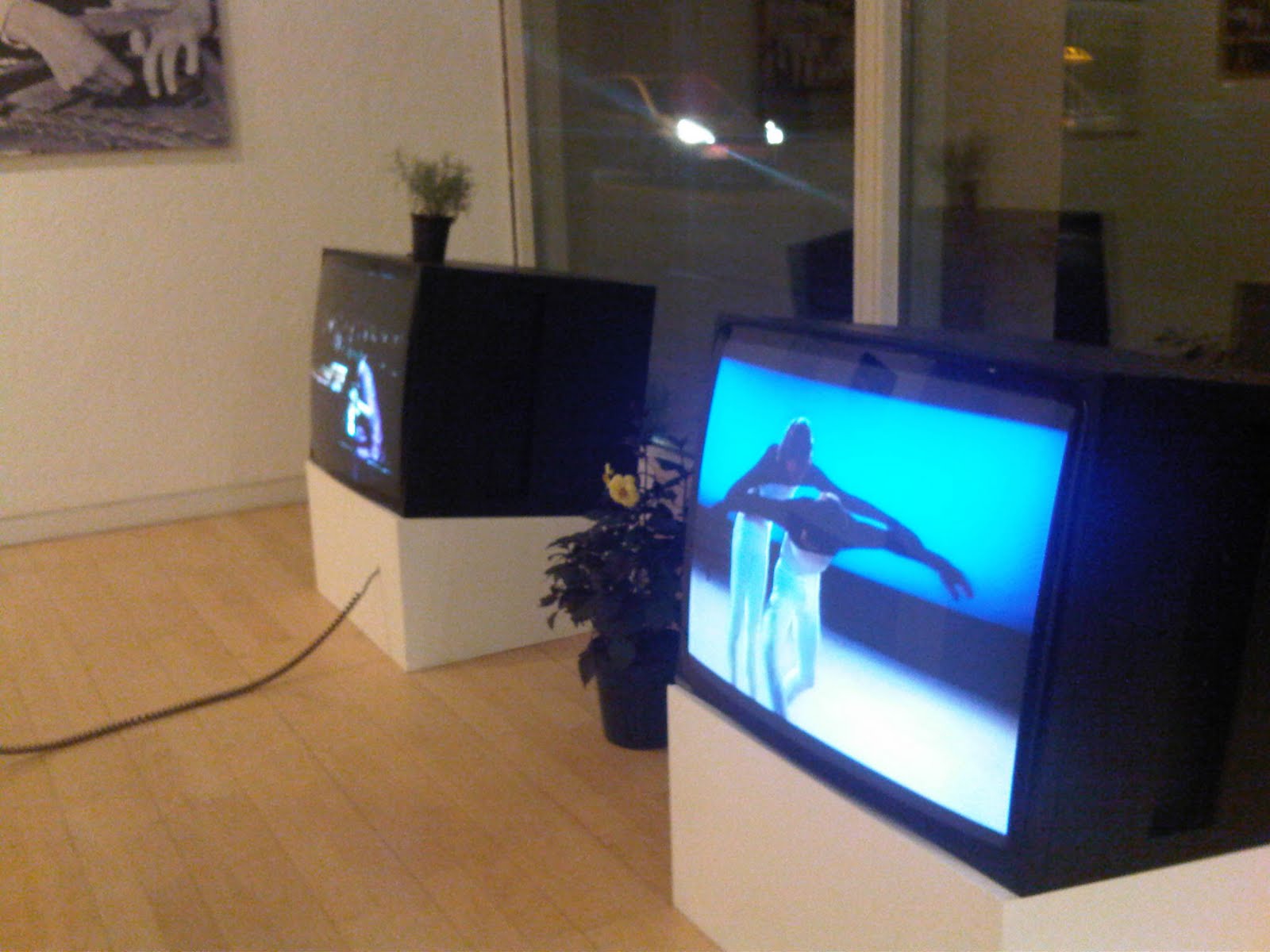
On Saturday my mother came to visit. We had lunch, shopped and then sipped pur takeaway coffees as we made our way across Jesus Green in the pink sunset for the last fading minutes of the John Cage exhibition at Kettles Yard. I have been meaning to get this exhibition all term and finally arrived, with my mother in tow. I made it a day before it finished, to realise that it was brilliant and that the 20 minutes we got before closing were never going to be enough to listen to all the recordings, watch all the footage of Operas in performance and enjoy the highlight of the exhibition and place a plant.


I enjoyed the plants a lot. As you enter the exhibition the curious network of potted plants pave the exhibition floor and they are what strike you and endow the space with a homely feel. You can pick up a plant and place it anywhere you like in the exhibition. Audience participation and exhibition interaction always excite me, I am easily pleased. However as some visitors have pointed out, you can't put your plant anywhere, you are in fact restricted to the floor. The neat position of some of the pots on the fringes of the rooms might also suggest the restrictions on plant-placing freedom. John Cage's prints are beautiful; ethereal, full of movement and subtle qualities, but they almost become peripheral to the plants. Some are accompanied by explanatory notes, 'This plant is definitely not happy here, it would like to be on the ceiling.'. The suggestion is that the plants direct and not visitors, that we might think we are contributing, but ultimately the artist is directing us.
My mother was unimpressed by the plants, she says she is too old for that kind of thing, she has seen it too often!

A plant cheekily nestled in a pair of head phones!