Related Posts Plugin for WordPress, Blogger...

Friday, 23 December 2011

A Poetry of Light

If it becomes necessary at the end of the year to become retrospective, then it is Tacita Dean's colossal film in the Turbine Hall of the Tate Modern that I will choose for my meditative space. This reel of flickering light is what I will picture in my mind's eye as I reflect upon the year of art.

The year has ended with a confessional of denouncers of video-art; Charles Saatchi dismissed it in his attack on the art world, and Waldemar Januszczak added 'please no more video art' to his Christmas wishlist, using Dean's giant film as the most irksome example of all.

And yet for me Dean's film is a beautiful tribute to a passion for her medium. Pure visual luxury. A poetry of light. A series of hypnotic images spliced together, saturating and shifting through filters. Uniquely accessible above all, not elaborately conceptualised or filled with the cold intellectualism which makes video art only briefly bearable. There is only a soft murmur above the film's visual soundtrack and tones of silence. The delicious hush of a captive audience.


In the Turbine Hall, dark except for the warm, drowsy luxuriance of Dean's video, there is something of the cinema. People sit on the floor in perfect silhouettes. Children totter up to the screen only to be shooed away again. The best manifestations of the Turbine commission are about interaction, have the power to transform the vacuous space into theatre and theme park.

It has the melancholy of obituary about it; Dean is painfully aware that her medium is dying even as she celebrates its richest qualities. Yet there is a joyous buoyance too; growth and regeneration, giant balls float gently in the Turbine Hall. The Turbine Hall projected onto the Turbine Hall, seems like a generous thank you to the commission itself.


Waldemar ends his Christmas wish list by requesting that at least, there will be a time limit imposed upon video art of 2 minutes maximum. But I sit on the cold floor letting Dean's visual poetry wash over me like the cascades of the waterfall in the film. I could give all my time to its entrancing assault on my senses. For me Dean's films is one of those legendary Turbine commissions, like Ai Weiwei's sunflower seeds or Carsten Holler's slide, that I will always be able to say that I saw. It is a lyrical affirmation of the importance of video art in a year of dissent.


Sunday, 6 November 2011

Treasure

I am not going to make this another lament about the decline of my blog. Today I went to my favourite charity shop and found treasure.
'For surely they are not only lovely pictures of fragments of a lovely creation, they are patterns of things we all know if we have ever really lived: they are Figures of the True.'
'one never knows where a book may wander'


Wednesday, 10 August 2011

Ascension

*Please note, the photos are borrowed!*

We arrived in the church of San Giorgio Maggiore as a man and a woman emerged from a trap-door in a grey painted platform beneath the Dome. We took our seats in anticipation as four walls of fans whirred to an exhausted stop and left only an eery silence. We had arrived at Anish Kapoor's Ascension at the beginning of its lunch break. On the Venetian island of San Giorgio there was plenty Biennale to keep us entertained while we waited for Kapoor's installation to siesta: a photography exhibition of Real Venice, an exhibition of developments in tapestries, Penelope's Labour.


At 2.30 there were crowds of people on the white-hot stairs of the Abbazia waiting for the doors to open on Kapoor's miracle. Even if you see the mechanics exposed; the invigilator disappearing to switch on, the fans warming up and Kapoor's ghost struggling towards ascension; the installation retains the quality of miracle. Smoke or mist,spirit or ghost; Anish Kapoor has created the perfect illusion. Installed here in the dome of
San Giorgio's beautiful church it takes the viewer's breath away. A twist of dusty air curls up towards the heavenward cupola; a spirit ascending to the highest heights of religious experience.


Monday, 8 August 2011

Illuminazioni

On our last night in Venice we left St Mark's after seeing Sting perform. Water had filled the square and was puddling beneath the cathedral. Chains of people splashed through the growing lake as they walked home. We took the ferry along the Grand Canal where the Venetian facades were softly illuminated in the starry dark of La Serenissma. The night waters were rising above the level of the city; crashing against squares where people sat at tables drinking, lapping at the feet of buildings, nudging at doorways. At the steps of the Natural HistoryMuseum a giant crab now floated in the quietly menacing black of the water. I felt the wonder of Venice under threat.

The waters of Venice must have seeped into my imagination and soaked its liquid impression upon me. That night I had a waking dream in which the rippling springs of my mattress metamorphosed into a Traghetto on the unsettled waves, the room was filled with a shimmering blanket of water and our rucksacks became a ferry navigating the narrow passage between the bunk beds. I quietly gasped and pushed my things beneath the bed to make room for its journey. Che bello sogno Venezia! In one night I had become enrapt by La Serenissima's buoyant magic.


The Illuminazioni signs with a map to help you navigate the events.


Being in Venice during the Biennale was fabulous, our wandering of the streets was punctuated by the discovery of pavillions, installations and parallel exhibitions. The black and red signs became beacons. We were travelling across Europe on a budget so we couldn't afford to pay to get into the pavillions at the Arsenale or Giardini but enjoyed tripping up on the smaller, free exhibitions we found. I like to think we found the hidden treasures of the Biennale; the underrated and underappreciated pavillions on the fringes.


Underneath the Palazzo Ducale in the Palazzo delle Prigioni we found the The Heard and Unheard: Soundscape Taiwain. The Sound Library/Bar was one of the highlights of our chance discoveries. Kuo-Chang Liu had collected pieces of furniture from hotels and Karaoke bars in Taiwan and filled the elegant Venetian interior. Beneath the chandelier hanging from the ceiling faded leather armchairs became platforms for Taiwanese music. The circular bar in the centre served sound and video projects and the back room hosted emerging bands. The idea of a 'soundscape' is an exciting and immersive project and it managed to communicate something of popular Taiwan (with artists such as Ming-Chang Chen and Blacklist Studio) as well as an emerging, experimental art scene.


The Taiwanese Pavillion's melding of a stunning Venetian interior with its authentically evocative furnishings perfectly captured the Biennale's success. Modern galleries with their minimal white walls which give Art 'space' can never compete with Venice. Like the waters which seeped into my dream, Venice leaves its impression upon the art, it infects it with its magic.


I had seen Erwin Wurm's Narrow House in Beijing's 798 factory complex, but it looked different in the sunlight on the grass in the gardens of the Glasstress. The illuminated dancers on the Canal would not have had the same waltzy joy if their shadows hadn't glittered on Venice's waters. I wasn't really gasping at the dancers as we passed either, but at the ornate balconied Venetian facade now a kaleidoscope of green, blue, red and yellow windows. I regret not being able to see Song Dong's parents Beijing house transported to the Giardini, but have at least seen something of the atmosphere which the Biennale gives Venice and Venice gives art.

Thursday, 4 August 2011

Trains in Europe

Hello! I think it is about time that I returned to the blog for good now that I have graduated and the summer has well and truly arrived. I have just returned from an interrail trip across Europe. My friend and I traveled by train to Hamburg, Berlin, Prague, Bratislava, Vienna, Lake Bled, Ljubljana, Zagreb, Split, Venice, Verona and Milan. It was an amazing trip and I succeeded in talking my friend into art galleries, exhibitions and Biennale pavilions throughout our European tour. So expect stories very soon. Here a few photographs as a teaser, evidence that there is art everywhere in Europe if your eyes are open.

A pop-up installation of blue sheep in Berlin which had been travelling all over Germany.

Alfons Mucha's stained glass window in St Vitus' Cathedral, Prague.


Medieval carvings in Verona.

Zagreb's answer to the Berlin Wall.

Cloud Arrangers, an exhibition of music photography in Tivoli Park, Ljubljana.

Art Nouveau apothecary in Vienna.


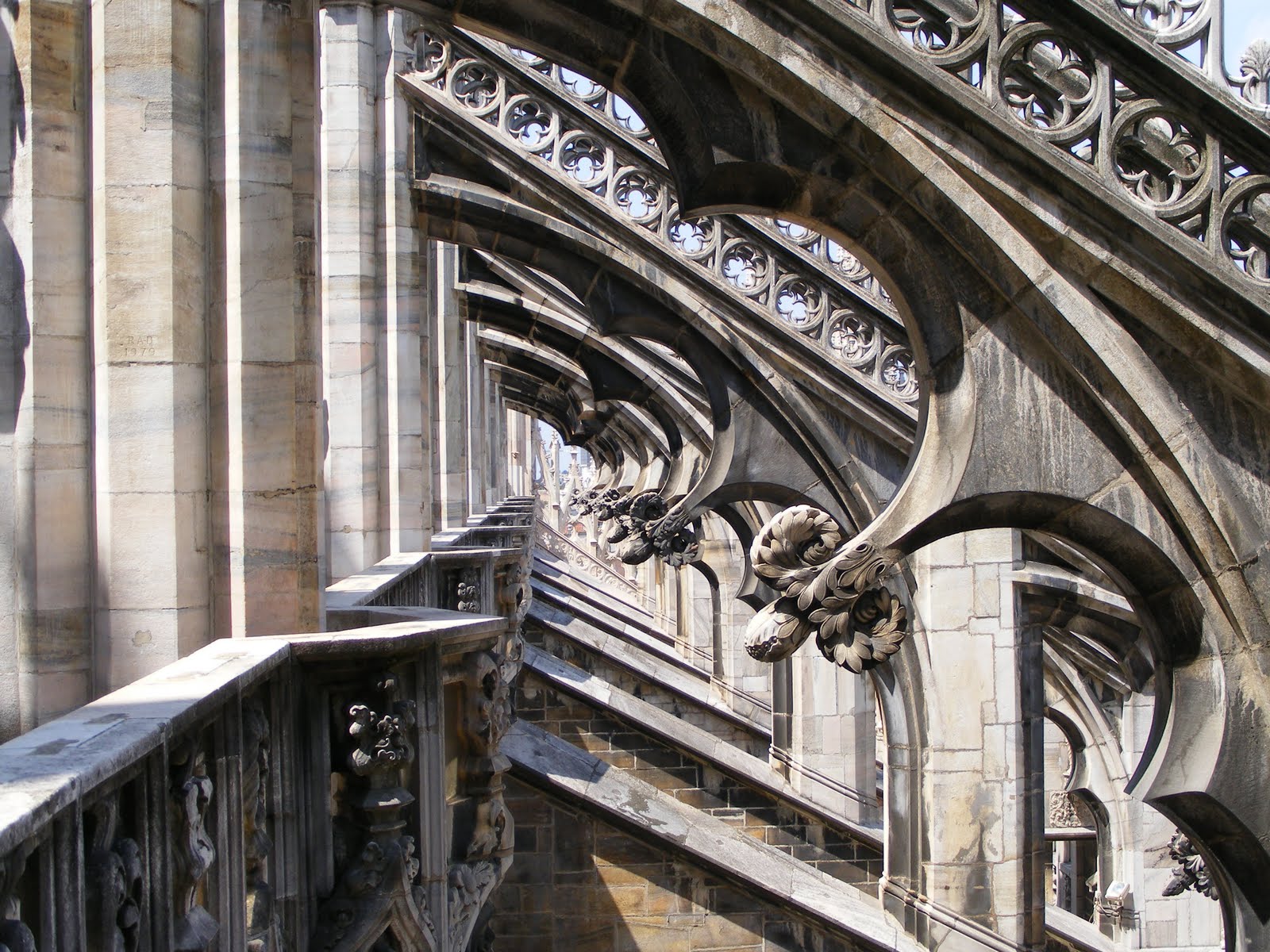
On the roof of the gothic cathedral in Milan.

Tuesday, 7 June 2011

Precious: Paula Rego and Siobhan Wall, New Hall Art Collection June 5th-July 3rd

Precious


Free samples of Natracare tampax and female genital mutilation. For an exhibition in an all girls college within the second largest collection of contemporary women's artwork in the world, the combination of polemic and promotion is awkwardly comic. All ironies aside, this is one of the most exciting exhibitions I have seen at the New Hall Art Collection. Paula Rego, powerful feminist dialogue, political intent...This is the kind of exhibition New Hall should be stripping its grey brick walls for, and which commands a visit.

'Precious has been organised to raise awareness about sexual violence against girls, in particular the widespread practice of female genital mutilation in countries like Ethiopia where WOMANKIND worldwide is active in trying to eliminate this harmful traditional practice...After watching a documentary about FGM, Paula Rego was so affected by what she saw, she produced the series of etchings in this exhibition. A few yeards earlier, Siobhan Wall travelled to Mali and learnt that FGM is still widely practiced in the country...she decided to raise funds for organisations that support attempts to end this traumatic practice.'

Siobhan Wall's paintings are small portraits of African women. They remind me of art therapy projects from communities of silenced women in Africa and of Chris Ofili's watercolours of diversity. They have an understated but powerfully resonant voiec. They remind us of the reality at the root of Rego's elaborated grand narratives. This is the major fault of the exhibition; the disproportionate nature of Rego's etchings and Wall's paintings, only exacerbated by their display on alternate walls. Wall's work needs the cavernous space of pointed silence. Rego's etchings clamour with indignation, they fill all available space, they rupture all silence. I find myself ignoring Wall.


Rego's narrative is etched with a painfully beautiful skill. The legacy of her 'Nursery Rhymes' mean that all her etchings appear to me to be fabulous, fable-like, a complex work of visual storytelling. This is the comfort, the richness of ink, that makes the reality all the more difficult to bear. Rego has created a villain of FGM; starved of voluptuous feminity, wrinkled gourds for breasts, gnashing teeth for a vagina, a living corpse. She is the bogeyman of little girls' nightmares. But worse than this, this is a purposefully female narrative. It is women who perpetrate and perpetuate and perform abuse. Grandmothers, Nannys, Mothers all lead the little girls to their mutilation, restraining and holding their hands over mouths as the little girl's legs are spread, because 'Mother Loves You'. There is no patriarchy or misogyny, none of the expected and accepted forms of oppression.


Any exhibition here is going to suffer from the limits of the exhibition space; the light from fountain court flashes across the picture frames, I have to dance and dodge about to admire the rich depth of Rego's etchings and aquatints, and there is little opportunity to step back and survey in an exhibition which demands our consideration. Stark and sparse; such a bold curatorial statement extrapolates beyond the limits of the narrow corridor.

When I first came to the college it was Rego's etching 'Encampment' locked away in the Fellow's Drawing room that I sought out and coveted as the treasure of the collection. The steely stars glimmer in the sky above, stories are told in the shadows, and fires quietly illuminate the surreal camp of dancing animals and children. Why didn't the New Hall Art collection have more of Rego, I wondered. This exhibition is the one I have waited for, for three years.

Sunday, 10 April 2011

Sunday Selections

Time for Sunday Selections again! It seems that this is all I am getting time for! However, I am making a Sunday trip to see a living hand-press today, so some photos might be in order!

These photographs need to be introduced with a little story. It was approaching 3am on our final night in Craiova, Romania, before our holidays. We were in the smoky depths of Pub's Pub crowned with tequila sombreros, dancing and singing, when a student suggested we might get on their 3.30 train to the beach. In a tequila-fuelled panic we rushed home, packed our bags, woke up our friend and fellow traveller and bought the last standing seats on the train to Costinesti. The train was 11 hours long. Without a seat, tripped over like a piece of luggage in the aisle, our adventure began to seem less and less like a good idea.

But it was worth it, for the story and for the memories. These photographs are from the first night when we went to a big concert on the beach to see some Romanian music stars. That is the longest I may have ever gone without sleep and by the end of the show the strobe lights were lulling me in to a dance-floor-dream. I think the strange abstract catches of light recreate the sense of excited exhaustion. It's a shame that so many arms and heads manage to get in the way of the magic.