This is a copy of an interview I wrote for www.flaneur.me.uk
This week, after almost a year of work, Daniel Kelly’s play The Pirates of Carthage will finally make it out of the studio and onto the radio waves before moving to the stage at The Nellie Dean in Soho next week.
I go to meet Daniel Kelly in his Bow Road studio in the East of London. Newly moved in, with a couple of artist friends, the space is still sparse although it has got a newly built mezzanine. Kelly is tall, he’s wearing a fuzzy Russian hat, and a slightly paint bespattered tartan jacket with a silky scarf. He looks appropriately arty, but then it’s also a ploy to keep warm. With jasmine tea, and a heater between us, we begin to chat about The Pirates of Carthage.
This is ‘A play about Tunisia, Twitter and the power of the people’. But to describe it simply as a play is a little misleading, as Kelly explains; he is primarily a visual artist and this hasn’t been about leaving all that behind to become a writer. The Pirates of Carthage would be more accurately described as a multimedia artistic project; an interactive series of performances across media, based on a collage of tweets, quotations from Gustave Flaubert’s Salammbo, Tunisian hip-hop, and a video montage of internet surveillance. On Thursday 12th January at 8pm a live interactive radio performance will be broadcast on Resonance FM (resonancefm.com/listen), on the 14th there will be a live streaming (frenchriveria1988.com, 4.30pm), and from the 16th there will be performances at the Nellie Dean in Soho.
Kelly sees his new project as having roots in his earlier practice of collaging in painting. The artistic development involved in The Pirates of Carthage, from painter to multimedia artist, was necessary in order to respond to Kelly’s inspiration; the powerful utilization of Twitter during the Tunisian uprising which led to the overthrow of the prime minister in January last year. Perhaps like many people, Kelly watched the Tunisian people revolting via Twitter in awe. Feeling the need to respond he began by taking photographs from the newspapers and working them into paintings, but this seemed too simple. He had to use the tweets at the centre of the story, and it was essential that they were read aloud. Flaubert’s Salammbo, which is included as excerpts from an audio tape, adds historical resonance to our sense of the significance of the recent uprising.
The demands of the project have forced Kelly to become a playwright, a producer, to collaborate with aDirector and actors, with Tunisians and activists, and to become a brilliant self-publicist and galvanizer of willing friends. And what kind of a manager has he been? ‘I’m usually quite a relaxed person but I have found myself getting quite stressed at rehearsals. So now, I don’t have a coffee beforehand, I’m trying to be more calm.’
There is a lot of Kelly in the project. If you go to the Nellie Dean you’ll find in the introductory visuals, the eye of the artist staring back at you. By filming his screen as he used the internet and layering this into a video montage, Kelly sifts through the accessible data of the web; BBC News, newspapers, Youtube videos of Glee asking ‘Who Run the World’?, and soft porn, until we gradually see him focusing in on the Tunisian conflict; images of Sidi Bouzid, news stories, twitter feeds. Kelly says he had to ask himself who ‘was I to be making a political work about the Tunisian conflict?’ But the video demonstrates that we all have access to this public history, and that the internet and Kelly’s play are powerful ways of understanding it.
The whole journey and artistic process has been documented on Twitter. In fact when I check on my way home a new update reads ‘Just done an interview for @flaneurzine buzzzzzzzin’ with the obligatory #pcarthage.
Kelly’s play has been devised from the archives of the Tunisian conflict’s history on Twitter, and now Kelly’s play in turn has its own digital, trackable, archive. With a kind of essential circularity Kelly pays tribute to his work’s genesis by hashtagging ‘ #sidibouzid and connecting himself back to the conception of the conflict. Of the original Tweeters; Kacem4, has created and managed the project’s blog, and a Guardian commentator will now be in the performance. This is a homage, above all, to the awe the uprising instilled in people.
If Kelly has an ambition, it is that his work can honour the original sense of collaboration and community, to prove Twitter to be as significant an artistic tool as it is political. He doesn’t believe that artists are particularly engaged with technology; they aren’t exploiting, as Kelly has, the potential of platforms such as Twitter. ‘We didn’t use the internet when I was at school’ perhaps it is only now ‘that a new generation of technologically-engaged artists is emerging.’ With a glitter in his eye, it’s exciting to think that he might be one of the first.
At the end of the Resonance FM streaming, the audience can interact by tweeting, and Kelly hopes that many of these will come from Tunisia. With any luck #pcarthage will also be trending. He likes the idea that it will be the Twitter archive, and not the book he is producing, which will survive for posterity and represent the legacy of The Pirates of Carthage. The play proves that what we so frequently see as the ‘disposable’ ‘throwaway’ comments on Twitter are actually far more concrete and lasting; ‘perhaps in years to come the internet will seem more real than any of the physical relics of our time and historians will be looking at Twitter.’
Radio Performance- 12th January, 8.00pm (GMT) 104.4fm resonancefm.com/listen
Live Stream- 14th January, 4.30pm frenchriveria1988.com
Play- 16, 17, 23 and 24 January, 7.30pm. The Nellie Dean of Soho, tickets 5 pounds (80 Dean Street, W1D 3SU)
Artist Talk- 21 January, 7.00pm
ticket booking: frenchriviera1988.com
pcarthage@gmail.com
piratesofcarthage.wordpress.comfacebook.com/pcarthage

Tuesday, 17 January 2012


Monday, 2 January 2012
The Peripatetic School: Itinerant drawing from Latin America
 Ishmael Randall Weeks, Fragments 2011, Mixed Media Installation
The Drawing Room is a small gallery stranded in Bermondsey (although the opening of the new White Cube might suggest it won't be stranded for long). It is a 15 minute walk from the tube station through suburbs and housing estates, but you must not let doubt creep in. When I eventually find it, the converted Drawing Room factory stands in the deserted centre of an industrial complex, it seems to have no entrance. I circle the building in silence and begin to think I have been led to the biggest prank in the art world.
You have to ring a bell and someone will come to let you in. The Drawing Room is the Tate Modern's cooler little brother; subsidiary projects which are far too niche to grace the walls of Gilbert Scott's epic factory, but which, without the support of their rich elder sister would surely die. In ways that other galleries can't, The Drawing Room just gets to have fun, and The Peripatetic School's Latin American artists are the best example of this.
 Tony Cruz, Distance Drawing San Juan/ London, an attempt to draw the distance from San Juan to London (6,751.2362m). Realised only 0.0031890 percent (2,153m) 2011, Dibujo Distancia
Latin American art is obsessively peripatetic, concerned with the landscape, both urban and rural and the things we might find in travelling, or the things we might take with us. Brigida Baltar's works Untitled and Sertao's Flora use earth as their primary material; Sertao's grip upon Baltar's artwork is as more than just a place of origins and imagination. Her paintings of the Flora of her home town are delicate, nostalgic earth works.
There is a polemic in this exhibition. Drawing, so frequently the medium of peripheral sketchbook studies, has powerful energy and movement and is used here in challenging ways. Nicholas Paris' Hurry Slowly is a series of drawings and cut-outs of a running man which incorporate a number of found objects; the heel of a shoe, a piece of driftwood, a spirograph. Totems which rest on a shelf below the drawings. Testaments to our attachment to objects, but also their portability, both imaginatively and physically. Each object changes the drawing; it's texture and its mobility. Our sense of the speed at which the figure hurries is modulated by its object.
 Mateo Lopez, Nowhere Man 2011, Mixed Media Installation
'Drawing has always been the most portable medium' claims the exhibition blurb. Tony Cruz's Distance Drawing, a pencil drawing made directly onto the wall of the old factory, is like the automatic scribblings of a seismograph. It feels like the obsessive scribblings of an artist desperate to record; and yet its obvious portability destroys the illusion. How many times will the unfinished drawing be reproduced, and how is it transported between galleries, from wall to wall?
The installations of Mateo Lopez and Ishmael Randall Weeks look as though they could be packed up and carried away. Lopez's Nowhere Man is a temporary home with desk drawers filled with maps, and more suggestive materials scattered about than can be processed in a single viewing. But the overall sense is of its emptiness. Randall Weeks' Fragments is my pick of the whole exhibition; an architect's table of sketches and plans, towards a Utopia? But once again it has been abandoned, stranded in Bermondsey.
You might arrive to find the space empty, but treasure it all the more. The Drawing Room is doing really exciting things with its factory. The Peripatetic School is an intellectually engaging exhibition. The white bricks walls like blank paper, let these displaced drawings speak for themselves, and what they have to say is filled with energy and itinerant creativity.
The exhibition will be at Mima in Middlesborough until the 12th February 2012.
Friday, 23 December 2011
A Poetry of Light
If it becomes necessary at the end of the year to become retrospective, then it is Tacita Dean's colossal film in the Turbine Hall of the Tate Modern that I will choose for my meditative space. This reel of flickering light is what I will picture in my mind's eye as I reflect upon the year of art.
The year has ended with a confessional of denouncers of video-art; Charles Saatchi dismissed it in his attack on the art world, and Waldemar Januszczak added 'please no more video art' to his Christmas wishlist, using Dean's giant film as the most irksome example of all.
And yet for me Dean's film is a beautiful tribute to a passion for her medium. Pure visual luxury. A poetry of light. A series of hypnotic images spliced together, saturating and shifting through filters. Uniquely accessible above all, not elaborately conceptualised or filled with the cold intellectualism which makes video art only briefly bearable. There is only a soft murmur above the film's visual soundtrack and tones of silence. The delicious hush of a captive audience.

In the Turbine Hall, dark except for the warm, drowsy luxuriance of Dean's video, there is something of the cinema. People sit on the floor in perfect silhouettes. Children totter up to the screen only to be shooed away again. The best manifestations of the Turbine commission are about interaction, have the power to transform the vacuous space into theatre and theme park.
It has the melancholy of obituary about it; Dean is painfully aware that her medium is dying even as she celebrates its richest qualities. Yet there is a joyous buoyance too; growth and regeneration, giant balls float gently in the Turbine Hall. The Turbine Hall projected onto the Turbine Hall, seems like a generous thank you to the commission itself.

Waldemar ends his Christmas wish list by requesting that at least, there will be a time limit imposed upon video art of 2 minutes maximum. But I sit on the cold floor letting Dean's visual poetry wash over me like the cascades of the waterfall in the film. I could give all my time to its entrancing assault on my senses. For me Dean's films is one of those legendary Turbine commissions, like Ai Weiwei's sunflower seeds or Carsten Holler's slide, that I will always be able to say that I saw. It is a lyrical affirmation of the importance of video art in a year of dissent.

The year has ended with a confessional of denouncers of video-art; Charles Saatchi dismissed it in his attack on the art world, and Waldemar Januszczak added 'please no more video art' to his Christmas wishlist, using Dean's giant film as the most irksome example of all.
And yet for me Dean's film is a beautiful tribute to a passion for her medium. Pure visual luxury. A poetry of light. A series of hypnotic images spliced together, saturating and shifting through filters. Uniquely accessible above all, not elaborately conceptualised or filled with the cold intellectualism which makes video art only briefly bearable. There is only a soft murmur above the film's visual soundtrack and tones of silence. The delicious hush of a captive audience.

In the Turbine Hall, dark except for the warm, drowsy luxuriance of Dean's video, there is something of the cinema. People sit on the floor in perfect silhouettes. Children totter up to the screen only to be shooed away again. The best manifestations of the Turbine commission are about interaction, have the power to transform the vacuous space into theatre and theme park.
It has the melancholy of obituary about it; Dean is painfully aware that her medium is dying even as she celebrates its richest qualities. Yet there is a joyous buoyance too; growth and regeneration, giant balls float gently in the Turbine Hall. The Turbine Hall projected onto the Turbine Hall, seems like a generous thank you to the commission itself.

Waldemar ends his Christmas wish list by requesting that at least, there will be a time limit imposed upon video art of 2 minutes maximum. But I sit on the cold floor letting Dean's visual poetry wash over me like the cascades of the waterfall in the film. I could give all my time to its entrancing assault on my senses. For me Dean's films is one of those legendary Turbine commissions, like Ai Weiwei's sunflower seeds or Carsten Holler's slide, that I will always be able to say that I saw. It is a lyrical affirmation of the importance of video art in a year of dissent.
Sunday, 6 November 2011
Treasure
I am not going to make this another lament about the decline of my blog. Today I went to my favourite charity shop and found treasure.
'For surely they are not only lovely pictures of fragments of a lovely creation, they are patterns of things we all know if we have ever really lived: they are Figures of the True.'
'one never knows where a book may wander'


'For surely they are not only lovely pictures of fragments of a lovely creation, they are patterns of things we all know if we have ever really lived: they are Figures of the True.'
'one never knows where a book may wander'


Wednesday, 10 August 2011
Ascension
*Please note, the photos are borrowed!*
We arrived in the church of San Giorgio Maggiore as a man and a woman emerged from a trap-door in a grey painted platform beneath the Dome. We took our seats in anticipation as four walls of fans whirred to an exhausted stop and left only an eery silence. We had arrived at Anish Kapoor's Ascension at the beginning of its lunch break. On the Venetian island of San Giorgio there was plenty Biennale to keep us entertained while we waited for Kapoor's installation to siesta: a photography exhibition of Real Venice, an exhibition of developments in tapestries, Penelope's Labour.
We arrived in the church of San Giorgio Maggiore as a man and a woman emerged from a trap-door in a grey painted platform beneath the Dome. We took our seats in anticipation as four walls of fans whirred to an exhausted stop and left only an eery silence. We had arrived at Anish Kapoor's Ascension at the beginning of its lunch break. On the Venetian island of San Giorgio there was plenty Biennale to keep us entertained while we waited for Kapoor's installation to siesta: a photography exhibition of Real Venice, an exhibition of developments in tapestries, Penelope's Labour.

At 2.30 there were crowds of people on the white-hot stairs of the Abbazia waiting for the doors to open on Kapoor's miracle. Even if you see the mechanics exposed; the invigilator disappearing to switch on, the fans warming up and Kapoor's ghost struggling towards ascension; the installation retains the quality of miracle. Smoke or mist,spirit or ghost; Anish Kapoor has created the perfect illusion. Installed here in the dome of
San Giorgio's beautiful church it takes the viewer's breath away. A twist of dusty air curls up towards the heavenward cupola; a spirit ascending to the highest heights of religious experience.

Monday, 8 August 2011
Illuminazioni
On our last night in Venice we left St Mark's after seeing Sting perform. Water had filled the square and was puddling beneath the cathedral. Chains of people splashed through the growing lake as they walked home. We took the ferry along the Grand Canal where the Venetian facades were softly illuminated in the starry dark of La Serenissma. The night waters were rising above the level of the city; crashing against squares where people sat at tables drinking, lapping at the feet of buildings, nudging at doorways. At the steps of the Natural HistoryMuseum a giant crab now floated in the quietly menacing black of the water. I felt the wonder of Venice under threat.
The waters of Venice must have seeped into my imagination and soaked its liquid impression upon me. That night I had a waking dream in which the rippling springs of my mattress metamorphosed into a Traghetto on the unsettled waves, the room was filled with a shimmering blanket of water and our rucksacks became a ferry navigating the narrow passage between the bunk beds. I quietly gasped and pushed my things beneath the bed to make room for its journey. Che bello sogno Venezia! In one night I had become enrapt by La Serenissima's buoyant magic.
The waters of Venice must have seeped into my imagination and soaked its liquid impression upon me. That night I had a waking dream in which the rippling springs of my mattress metamorphosed into a Traghetto on the unsettled waves, the room was filled with a shimmering blanket of water and our rucksacks became a ferry navigating the narrow passage between the bunk beds. I quietly gasped and pushed my things beneath the bed to make room for its journey. Che bello sogno Venezia! In one night I had become enrapt by La Serenissima's buoyant magic.
 The Illuminazioni signs with a map to help you navigate the events.
Being in Venice during the Biennale was fabulous, our wandering of the streets was punctuated by the discovery of pavillions, installations and parallel exhibitions. The black and red signs became beacons. We were travelling across Europe on a budget so we couldn't afford to pay to get into the pavillions at the Arsenale or Giardini but enjoyed tripping up on the smaller, free exhibitions we found. I like to think we found the hidden treasures of the Biennale; the underrated and underappreciated pavillions on the fringes.

 The Taiwanese Pavillion's melding of a stunning Venetian interior with its authentically evocative furnishings perfectly captured the Biennale's success. Modern galleries with their minimal white walls which give Art 'space' can never compete with Venice. Like the waters which seeped into my dream, Venice leaves its impression upon the art, it infects it with its magic.
 I had seen Erwin Wurm's Narrow House in Beijing's 798 factory complex, but it looked different in the sunlight on the grass in the gardens of the Glasstress. The illuminated dancers on the Canal would not have had the same waltzy joy if their shadows hadn't glittered on Venice's waters. I wasn't really gasping at the dancers as we passed either, but at the ornate balconied Venetian facade now a kaleidoscope of green, blue, red and yellow windows. I regret not being able to see Song Dong's parents Beijing house transported to the Giardini, but have at least seen something of the atmosphere which the Biennale gives Venice and Venice gives art.
Thursday, 4 August 2011
Trains in Europe
Hello! I think it is about time that I returned to the blog for good now that I have graduated and the summer has well and truly arrived. I have just returned from an interrail trip across Europe. My friend and I traveled by train to Hamburg, Berlin, Prague, Bratislava, Vienna, Lake Bled, Ljubljana, Zagreb, Split, Venice, Verona and Milan. It was an amazing trip and I succeeded in talking my friend into art galleries, exhibitions and Biennale pavilions throughout our European tour. So expect stories very soon. Here a few photographs as a teaser, evidence that there is art everywhere in Europe if your eyes are open.


A pop-up installation of blue sheep in Berlin which had been travelling all over Germany.

Alfons Mucha's stained glass window in St Vitus' Cathedral, Prague.

Medieval carvings in Verona.

Zagreb's answer to the Berlin Wall.

Cloud Arrangers, an exhibition of music photography in Tivoli Park, Ljubljana.

Art Nouveau apothecary in Vienna.
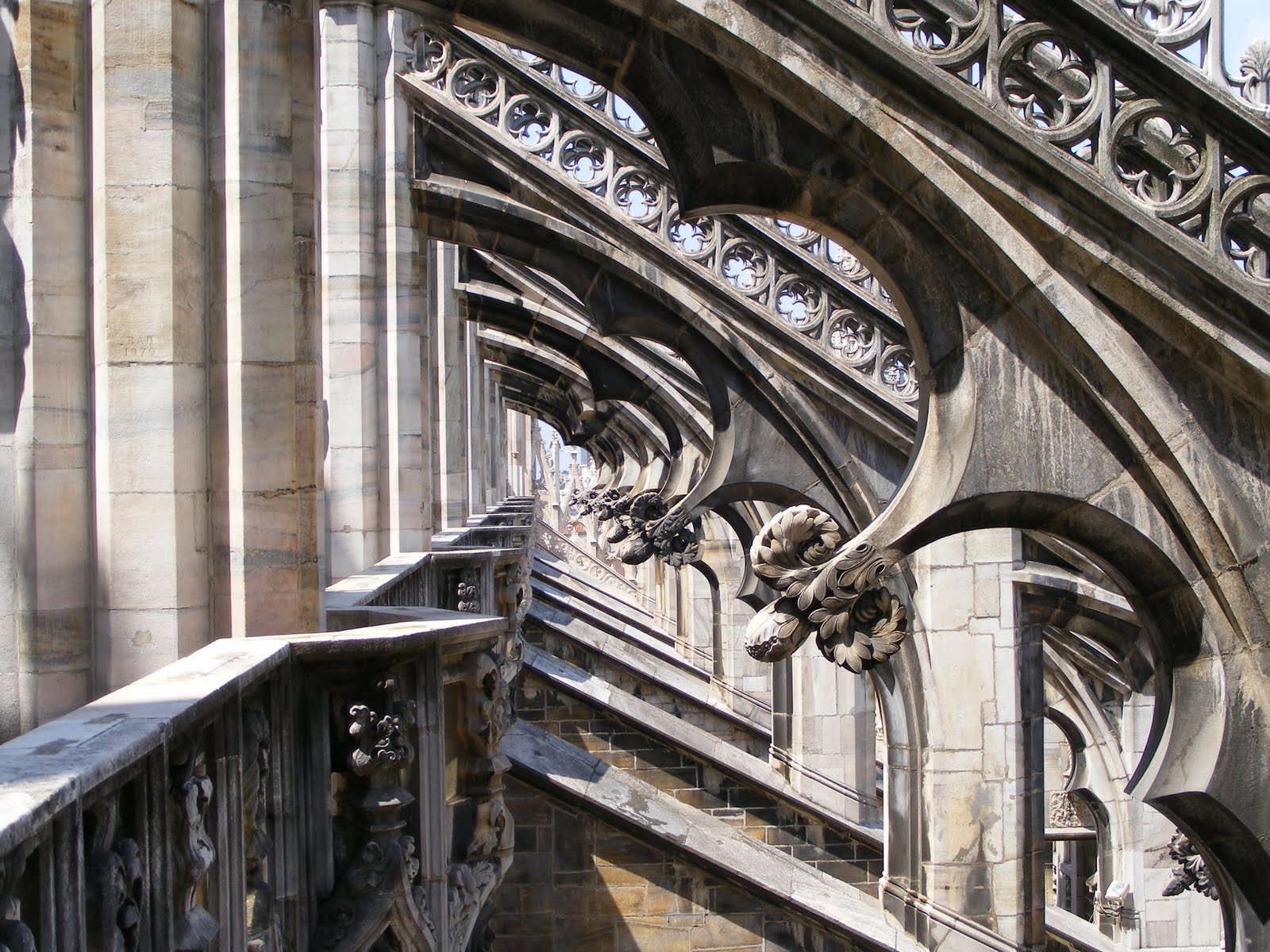
On the roof of the gothic cathedral in Milan.
Subscribe to:
Posts (Atom)